SIA Snow Show Brand Displays and Product Walls
Atlanta Shows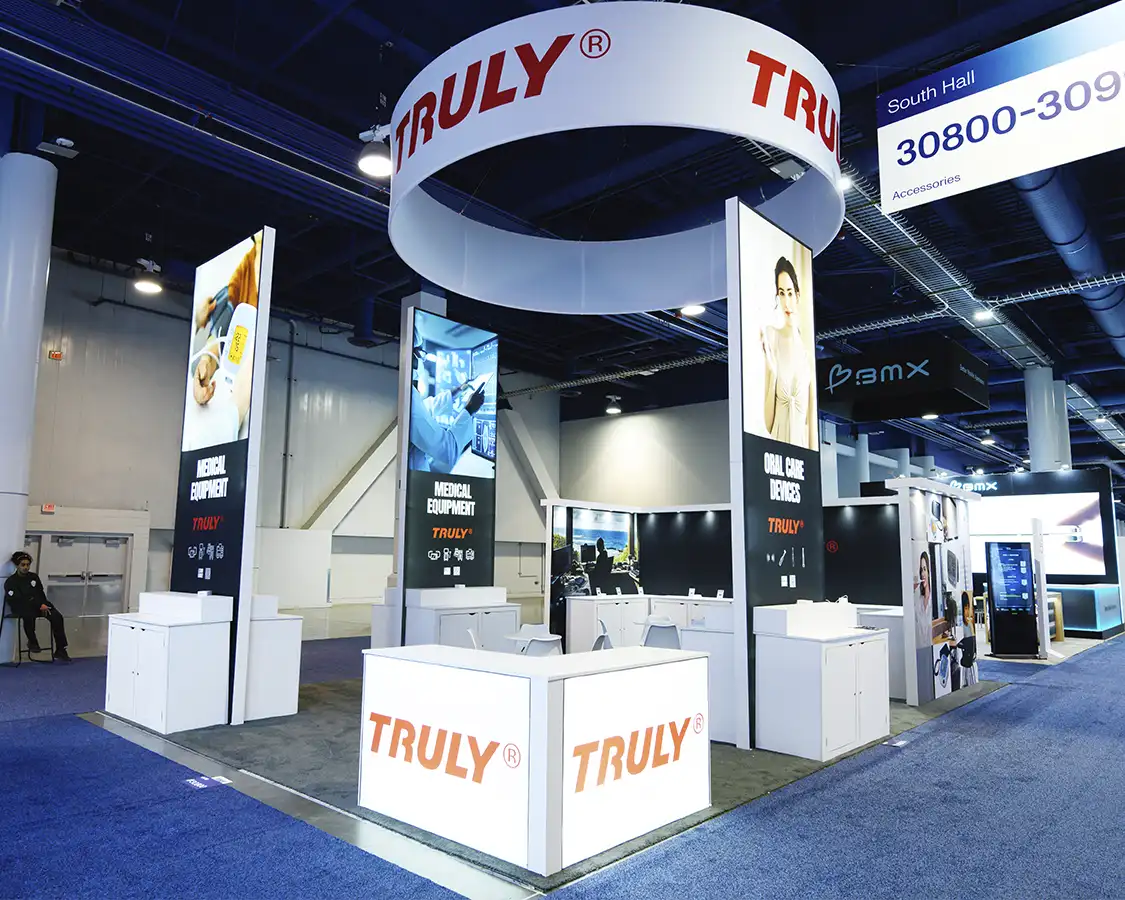
Displays for snowsports brands at the SIA Snow Show: ski and board walls, outerwear rails, a boot fitting bench and appointment tables, installed in Atlanta.
Snowsports brands sell to retail buyers who arrive with appointments and a season's open to buy. The display has to show the full line quickly, let a buyer pick up a ski or try on a shell, and give the sales team a table where orders get written. For brands at the SIA Snow Show, the display is part showroom and part sales office.
A layout we draw for this sector is a 10 by 30 inline. The left third is a slatwall hard goods wall with skis and boards hung in rows by collection. The center carries a backlit fabric panel with the season's campaign image above two outerwear rails. The right third holds a boot fitting bench and two small appointment tables, with a storage closet behind the backwall for size runs.
Hanging a full line on one wall
Skis and boards are long, and buyers want to compare them side by side. We spec slatwall panels with angled hooks set at heights that keep tips below the top of the frame and tails off the floor. Each row carries one collection, and a rail strip under each row holds the model name and the key specs your team supplies.
- Heavier boards hang on the lower rows so the wall stays balanced.
- Hook spacing is drawn on the panel layout so the crew can set the wall without guessing.
- Bindings and boots for display go on a low shelf, not on the hanging skis.
- A clear strip of floor in front of the wall leaves room for a buyer to pull a ski down.
Apparel rails and the campaign panel
Outerwear needs room to hang open so a buyer can see a liner or a vent. We place freestanding rails under the backlit panel, spaced so a jacket can be pulled forward without bumping the next one, and add two dress forms at the aisle edge for the hero pieces. The backlit panel uses a fabric graphic in an aluminum frame with LED light boxes behind it, which keeps the campaign image bright under hall lighting.
Lighting choices are on our lighting design for exhibits page, and the frame format is described on our backlit LED displays page.
Buyer appointments and the closet
Appointment tables sit at the quiet end of the booth with a line sheet stand and a tablet for order entry. Behind the backwall, a lockable closet with shelving holds size runs, extra samples and staff bags, so the sales team can bring out a size without leaving the booth. The closet door faces away from the aisle and the closet walls carry graphics on the outside.
Format choices for a long inline are worked out in our trade show booth design process.
Building the showroom on the floor
- Carpet and pad go down across the full run of the space.
- The backwall frame and closet go up, then the slatwall panels are fixed and leveled.
- The backlit panel is assembled, the light boxes are wired and the fabric is fitted.
- Rails, dress forms, the fitting bench and the appointment tables are placed.
- Your team hangs product and dresses the forms while we set the specs strips.
- We walk the space with your sales lead and adjust hook heights before doors open.
More on that sequence is on our installation and dismantle page.
What we draw from
Send the space size and booth number, a list of every model you plan to hang with lengths, and the number of jackets and pants on the rails. Tell us how many buyer tables you need at once and how much stock the closet must hold. Your campaign image and brand guide set the backlit panel. Fabric printing and slatwall come from build partners; we spec it, receive it and install it.
Keeping the wall fresh through buyer days
Buyers often ask to see colorways that are not on the wall. We leave one hook row and one section of rail empty so your team can rotate product during the day without crowding the display. Each morning before doors open on the Atlanta floor, the install crew checks hook heights, tightens any slatwall panel that has shifted and steams the backlit fabric if the frame was bumped. A small steamer and a spare hook kit stay in the closet for the rest of the show.
Packing a hard goods wall
At close your team removes product first, and skis and boards go back into their own bags and boxes. The crew pulls the hooks and bags them by row, takes down the slatwall, removes the backlit fabric and packs the light boxes in foam. The closet panels, rails and tables follow. Each case is labeled with its contents and the wall it belongs to, so the same layout can be rebuilt at the next show without a fresh drawing.
Questions Exhibitors Ask
Can the hard goods wall be reconfigured for a smaller space?
Yes. Slatwall panels come in sections, so we can drop a third of the wall and rearrange the rows for a 10 by 20 without new parts.
Where does extra stock go during the show?
In a lockable closet built behind the backwall with shelving sized to your size runs.
Does the backlit panel need its own power?
Yes. The light boxes need an outlet behind the panel, and we mark it on the electrical order.
Can we reveal a new product in the booth?
Yes. We keep the center rail clear for a covered hero product and pack a second backlit fabric in the closet so the campaign image can change at the reveal.
Send the show, venue and booth details
Call (404) 963-0416 or send the show, the hall and your booth number and we will plan the display, the install and the teardown.