AmericasMart Atlanta Apparel Market Booth Displays
Atlanta Shows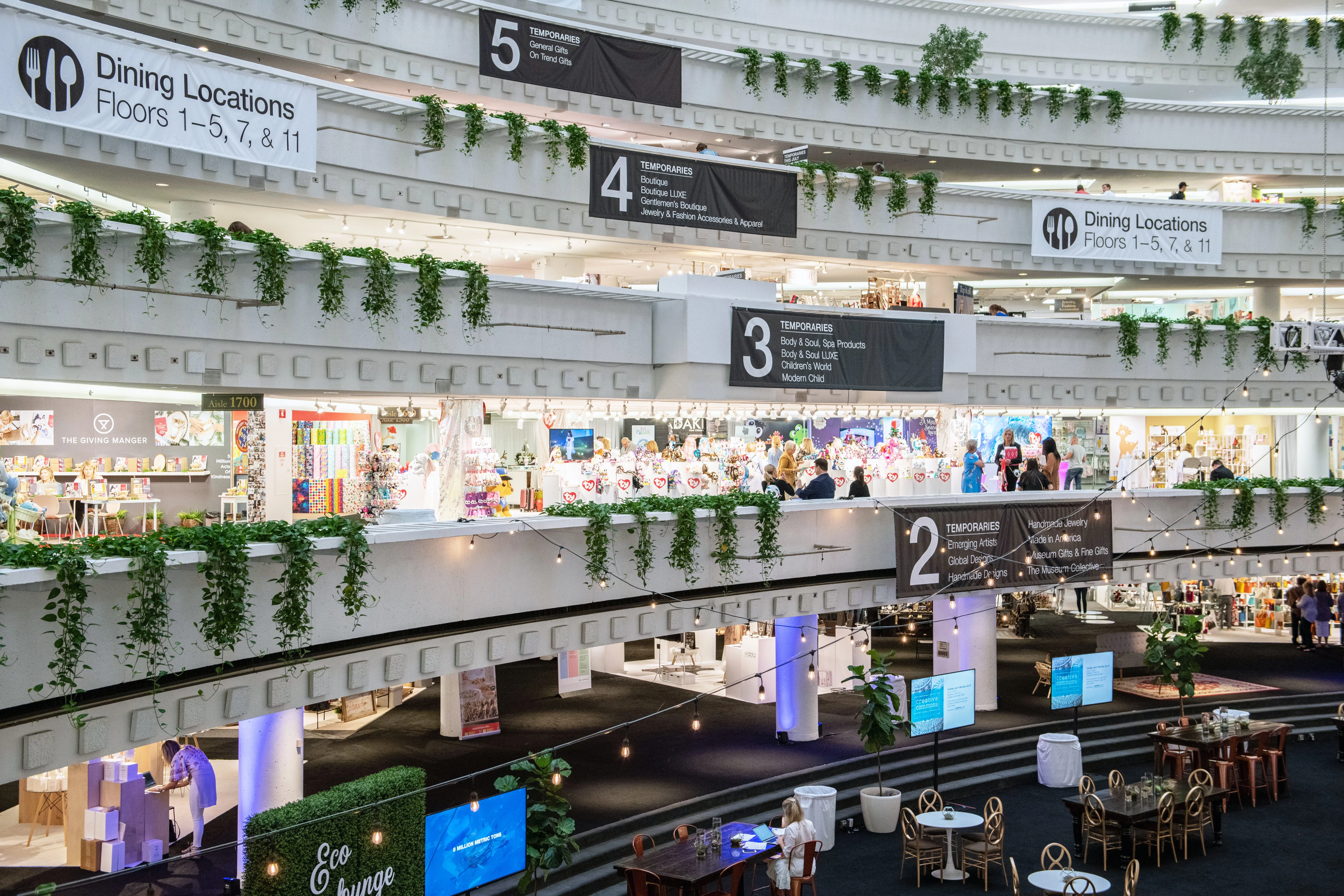
Booth displays for apparel brands at AmericasMart Atlanta Apparel Market: garment racks, fabric backwalls, fitting nooks, lighting and a planned install.
An apparel buyer walks a market looking at hundreds of lines in a few days. A booth has seconds to say what the brand is, what the line looks like and whether it fits the buyer's store. For an exhibitor at AmericasMart Atlanta Apparel Market, the display does that job with racks, faces-out hanging, a clear brand wall and enough light to show color and texture accurately.
A setup we build often is a 10 by 10 temporary booth with a fabric backwall carrying the brand name and a lifestyle image, two rolling garment racks along the side walls, a faces-out bar at the center of the backwall for the hero pieces, a small writing table with two chairs at the front and a mirror on a stand. It fits in a set of wheeled cases and two rack bags.
Choosing the format for a line
The format depends on how many pieces you show and how buyers move through the line. A tight capsule collection works on a 10 by 10 with two racks. A full seasonal line with several categories needs a 10 by 20 or a corner space, so tops, bottoms and accessories each get a wall. Brands with accessories, such as jewelry, bags or hats, add a table or a lit vitrine at the front of the booth.
- Rolling racks with a matching finish keep garments in order and can be repositioned during the day.
- Faces-out bars on the backwall show the key looks without hanging everything shoulder-out.
- Shelves or cubbies hold folded knits, denim and boxed accessories.
- A writing table near the front gives buyers somewhere to sit and place an order.
Our portable display systems page covers the frame kits that pack small enough to ship between markets.
Lighting and color
Garment color and texture read badly under flat overhead light. We add LED track or arm lights on the backwall frame, aimed at the faces-out bar and the racks, with a neutral color temperature that shows fabric as it will look in a store. A mirror gets its own soft light so a buyer holding a piece up to herself sees the true color. Each fixture is placed on the power plan so the booth does not need extension cords across the floor.
Lighting choices are covered in more detail on our lighting design for exhibits page.
Artwork and the brand wall
The backwall graphic for an apparel booth is usually a large lifestyle photograph with the brand name and perhaps the season. We recommend fabric graphics that pack folded, with a matte finish to cut glare. Artwork goes to print several weeks before move-in so there is time for one proof round and shipping. If the season's imagery is not shot in time, a clean brand wall in a solid color with the logo is a good fallback that can be reused next season.
Graphics are printed by build partners and your own vendors; we write the specs and receive the finished panels. File setup is on our exhibit graphics production page.
Move-in and hanging the line
On move-in day the crew lays any flooring, builds the backwall frame and hangs the fabric graphic. Racks are assembled, the faces-out bar and shelving go up and the lights are connected and tested. The table, chairs and mirror go in last. Your team arrives with the samples and steams and hangs the line. We stay to adjust light angles once garments are on the racks, because a light that looks right on an empty wall often hits the wrong place on a hanging dress.
The full sequence is described on our installation and dismantle page.
What to send us
We start with a short list. Send the booth number and size from your space contract, the number of pieces you plan to show and how many are hanging versus folded, your artwork files or the brand guide, and any accessories that need a table or a lit case. Tell us whether you need a steamer station and how many staff work the booth, so the writing table and storage are sized correctly.
Breaking down after market
When market closes, your team packs the samples first, into garment bags and boxes. The install crew takes down the lights, folds the fabric graphic into its bag, breaks down the racks and shelves and packs everything back into the labeled cases. Rack bags, hardware bags and the mirror case are counted against the packing list. Cases are labeled for return shipping to your office or for storage until the next market.
Steamers, hangers and garment bags are easy to leave behind in a busy close. We keep a final checklist taped inside the lid of the last case and run it before the cases go out.
If the next market is only weeks away, we pack the racks and the faces-out bar together with the lights still attached to their arms, wrapped in foam. That saves the crew an hour at the next move-in and keeps the light angles close to where your team liked them this time.
Questions Exhibitors Ask
How many garments fit in a 10 by 10?
Two rolling racks and a faces-out bar hold a capsule line comfortably. Larger lines or several categories need a 10 by 20 or a corner space.
Do you provide garment racks?
Racks can be part of your own kit or arranged through build partners or the show's providers. We spec, receive and assemble them with the display.
Can the booth be reused next market?
Yes. The frame, racks and lights stay the same, and only the backwall graphic is reprinted when the season imagery changes.
Send the show, venue and booth details
Call (404) 963-0416 or send the show, the hall and your booth number and we will plan the display, the install and the teardown.