INFORMS Meeting Exhibit Displays in Atlanta
Atlanta Shows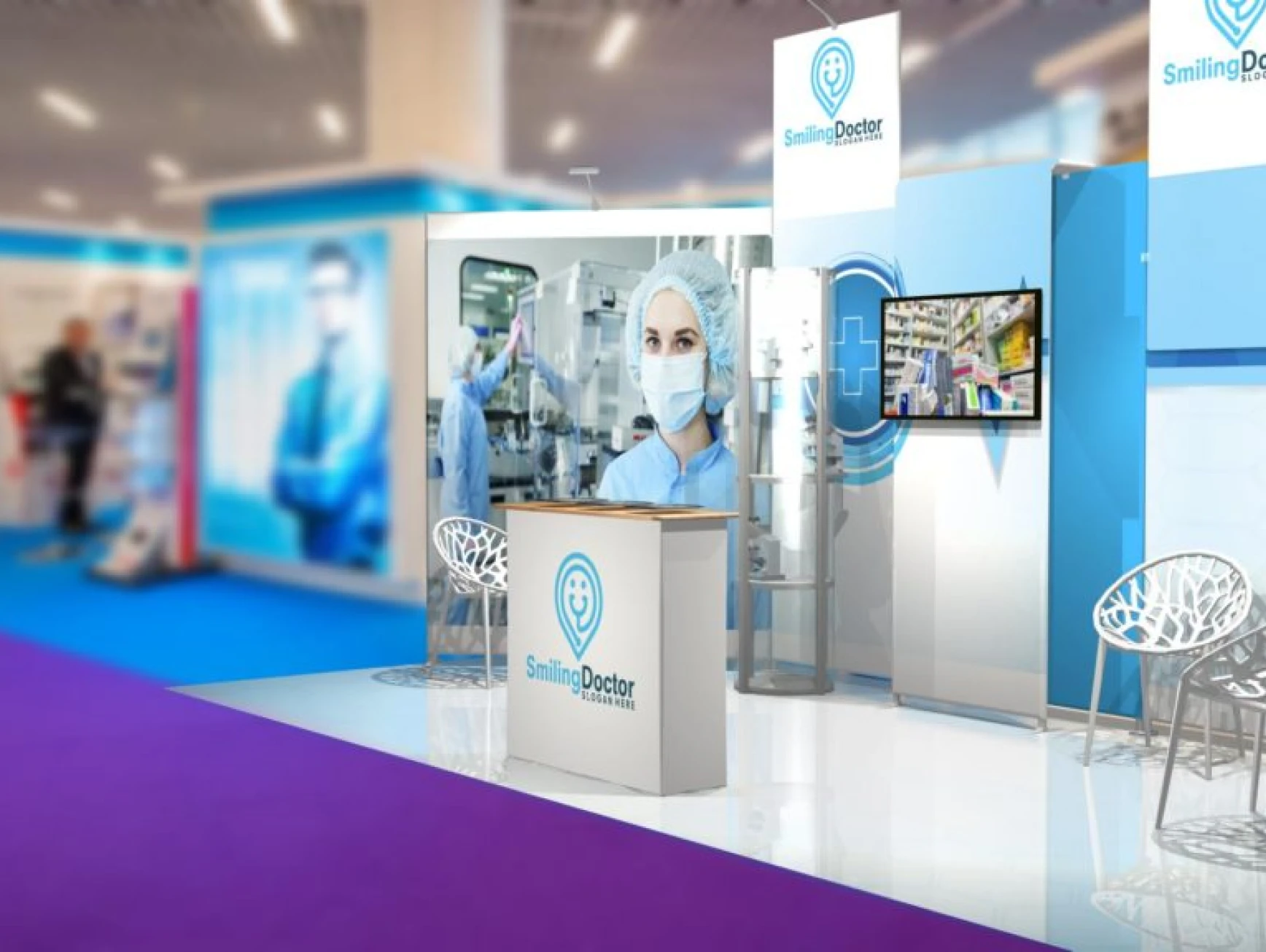
Exhibit displays for analytics software firms, publishers and graduate programs at the INFORMS Meeting: backlit backwalls, demo counters, book shelves.
Operations researchers and analytics professionals are a technical crowd. They want to see a solver run, read a table of contents or ask a graduate program about its faculty, and they will stand at a booth for a long conversation if the demo holds up. Exhibitors at the INFORMS Meeting are mostly software companies, academic publishers, consulting firms and university programs, and most work from a standard inline space.
A layout we draw for this sector is a 10 by 10 inline for an optimization software company. A backlit fabric backwall carries the product name and one line about what it solves. A standing demo counter sits at the front left with a large monitor on a pole mount, and a second laptop station on a high table at the right lets a sales engineer run a model with a visitor while another conversation goes on at the counter.
Two demos in a ten foot space
A small booth with two demo points needs careful spacing. We set the counter and the high table at opposite front corners so two groups can stand without blocking each other, and keep the center open so the backwall reads from the aisle. Cables from both stations run to a power strip behind the backwall through a channel in the counter and a cord cover under the table.
- The monitor sits high enough that a small crowd can watch over the shoulders of the person at the counter.
- The laptop station has a stool for longer modeling sessions.
- A shallow shelf on the counter holds white papers and business cards.
- Lead capture runs on a tablet clipped to the counter edge.
The format is described on our 10 by 10 trade show booths page.
Shelving for publishers and programs
Academic publishers and graduate programs need to show print. For them we swap the laptop station for a freestanding book tower with angled shelves at eye level and a flat shelf below for order forms. Graduate programs often add a monitor looping student research and a small table for faculty to meet prospective applicants. The same backwall frame works for each version, so a university can share a kit between departments.
Backwall copy for a technical audience
This audience reads closely and dislikes vague claims. The backwall works best with the product or program name, a plain statement of the problem it addresses and a single diagram or screenshot. Version numbers and feature lists belong on the monitor, where they can be updated without reprinting fabric. Backlit fabric keeps the headline crisp under ballroom or hall lighting.
Final files go to print several weeks before move-in, and we return a proof showing the frame edges and the light box seams. Fabric and file setup are covered on our exhibit graphics production page.
Install and the final walk
- The carpet goes down and the backwall frame is assembled and wired.
- The backlit fabric is fitted and checked for wrinkles with the lights on.
- The counter and the high table are set, and the monitor is mounted and powered.
- Your team logs into the demos, and we walk the booth with your lead from the aisle.
Our installation and dismantle page covers each step in detail, and layout choices start in our trade show booth design process.
Files and facts we need
Send the booth number, the space size and whether the show supplies a table and chairs. List the screens and laptops you plan to use and how many staff will work the booth at once. Tell us if the demo needs internet or runs offline, because an offline demo only needs power and a hall internet order needs lead time. Add your artwork or brand guide and any booth photos from past meetings.
Ballroom exhibit rooms
Academic and professional meetings often place exhibits in a hotel ballroom or a hall beside the session rooms. In a ballroom we get the move-in window, the dock appointment and the floor protection rules from the hotel's event services team, and we roll the cases on soft wheeled carts along carpeted corridors. The whole display is light enough to fit in a service elevator, which matters when the exhibit room in an Atlanta hotel sits on an upper floor.
Teardown and the next conference
When the hall closes, your team logs out of the demos and we take down the monitor first. The fabric comes off the frame and folds into its bag, the light boxes go into foam, and the frame packs into a rolling case with the counter. Cases are counted and labeled for return to your office or onward shipping to the next meeting on your calendar, as set out on our expo logistics and shipping page.
Questions Exhibitors Ask
Can a demo run without hall internet?
Yes. Most solver demos run offline on the laptop. We plan an internet order only when the demo needs a live connection.
Can a university share one display between departments?
Yes. The backwall frame stays the same, and departments swap the fabric graphic and the shelving or demo furniture.
Is a 10 by 10 big enough for two demos?
Yes, with the counter and the high table at opposite front corners and the cables run behind the backwall.
Can we change the backwall for a different product?
Yes. The fabric zips off the frame, so a second graphic for another product or a sister brand packs into the same case.
Send the show, venue and booth details
Call (404) 963-0416 or send the show, the hall and your booth number and we will plan the display, the install and the teardown.